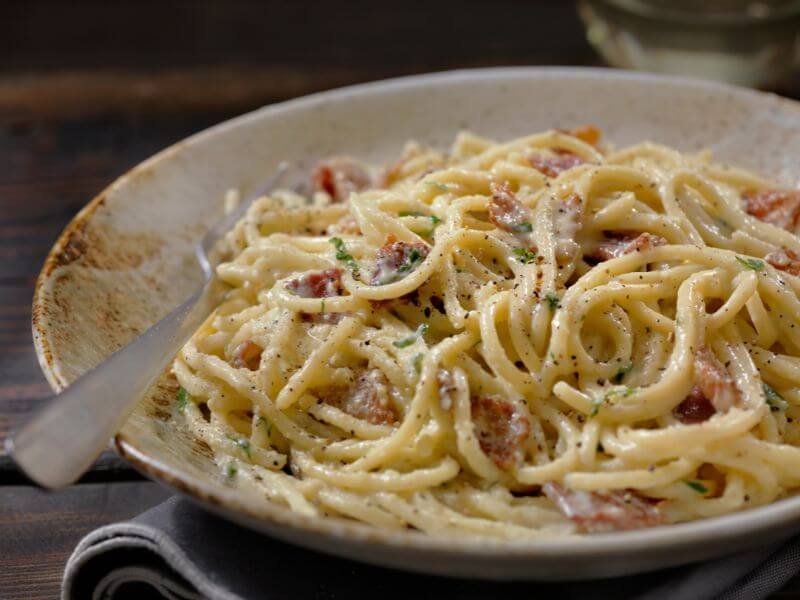
Spaghetti Carbonara – A Beloved Italian Dish [with Recipe]
There are few Italian dishes as iconic and beloved as Spaghetti Carbonara. With its creamy, rich sauce and hearty portions of pasta, this dish has been a staple of Italian cuisine for decades. Yet, despite its popularity, the origins of Spaghetti Carbonara remain shrouded in mystery.
Some believe it was created by Italian coal miners who used bacon and eggs as a quick and filling meal during their long shifts underground, while others claim it was a dish created by Italian chefs during World War II using readily available ingredients.
Regardless of its origins, one thing is certain: Spaghetti Carbonara is a classic Italian dish that has stood the test of time. In this article, we’ll explore the history, preparation, and variations of this beloved pasta dish, and uncover the secrets to making the perfect Spaghetti Carbonara.

Spaghetti Carbonara Origin and Curiosities
Delving into the fascinating origins of Spaghetti Carbonara is akin to embarking on a culinary treasure hunt, with its genesis shrouded in delicious mystery and charming anecdotes. Legend has it that the dish was born during World War II, when resourceful Italian cooks concocted a harmonious blend of American soldiers’ rations, like bacon and eggs, with their own traditional pasta.
However, others believe that Carbonara traces its lineage to the ancient Roman Empire, with its name rooted in the Italian word “carbonaro,” meaning charcoal burner. These workers, it’s said, would prepare the dish over open fires, infusing it with a smoky essence.
Yet another intriguing theory attributes the creation of this sumptuous pasta to secret culinary societies that existed in Rome’s underbelly. No matter which story captures your imagination, the enigmatic past of Spaghetti Carbonara adds an enticing layer of intrigue to this beloved Italian classic, further solidifying its status as a gastronomic gem.

Spaghetti Carbonara Vs Alfredo
At first glance, Spaghetti Carbonara and Fettuccine Alfredo might appear to be close culinary cousins, united by their luxuriously creamy and indulgent sauces. However, upon closer inspection, the distinctions between these Italian pasta favorites emerge, each boasting unique flavors and textures that have earned them devoted fans around the world.
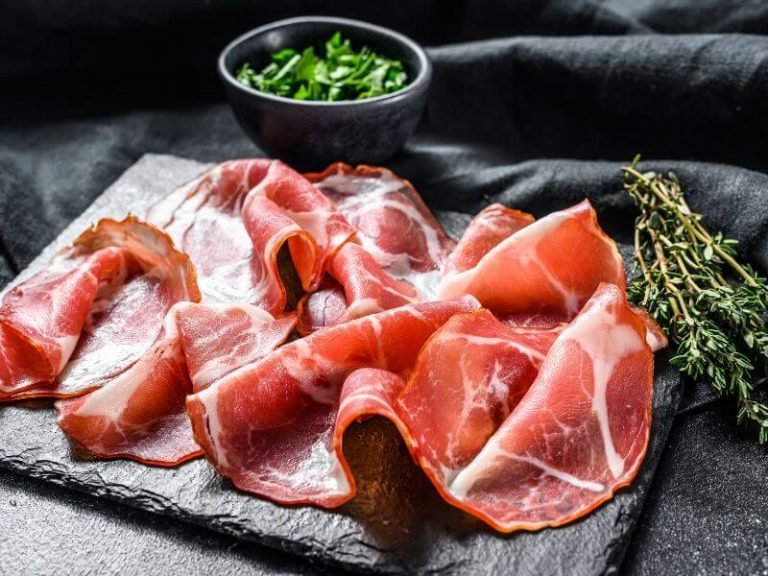
Carbonara’s signature sauce is a delicate marriage of raw eggs and grated Pecorino Romano cheese, gently cooked by the residual heat of the pasta, creating a velvety, golden elixir. The addition of pancetta or guanciale introduces an irresistible smoky and savory element, elevating the dish to new heights.
Guanciale and pancetta are both cured pork products, and they are part of a broader Italian cured meat tradition. If you enjoy learning about this side of Italian food, you may also like our guides to mortadella, soppressata, and coppa meat.
In contrast, Alfredo, a Roman classic in its own right, relies on the decadent combination of butter and Parmesan cheese, melted together to produce a silky, rich, and slightly nutty sauce that generously coats each strand of fettuccine. These two iconic dishes, while sharing a common Italian heritage, each stand proudly on their own, offering distinctly different yet equally tantalizing sensory experiences for pasta lovers to cherish.

Useful Tools for Making Spaghetti Carbonara at Home
You do not need professional restaurant equipment to make spaghetti carbonara at home, but a few simple kitchen tools can make the process much easier. Since carbonara depends on timing, freshly grated cheese, hot pasta, crispy guanciale or pancetta, and a silky egg-based sauce, the right tools can help you get a better result with less frustration.
A large pasta pot is useful because spaghetti needs enough space to cook evenly. A good cheese grater is also important because freshly grated Pecorino Romano melts into the sauce much better than pre-grated cheese. If you are preparing guanciale or pancetta at home, a sharp chef knife and a sturdy cutting board make it easier to dice the meat evenly before cooking.
Tongs are also very helpful when mixing the pasta with the egg and cheese mixture, because they allow you to move quickly and coat the spaghetti without breaking it. Finally, deep pasta bowls make carbonara easier to serve while keeping the sauce, cheese, and black pepper nicely combined.
- Large pasta pot for cooking spaghetti evenly
- Cheese grater for fresh Pecorino Romano
- Sharp chef knife for cutting guanciale or pancetta
- Sturdy cutting board for ingredient preparation
- Kitchen tongs for mixing the pasta and sauce
- Deep pasta bowls for serving carbonara
Spaghetti Carbonara Recipe
Here is mine detailed Authentic recipe for Spaghetti Carbonara.
Ingredients
- 14 oz (400g) spaghetti
- 4 large egg yolks
- 1 cup (100g) freshly grated Pecorino Romano cheese
- 7 oz (200g) guanciale or pancetta, diced
- 1 clove garlic, minced (optional)
- Freshly ground black pepper
- Salt, for pasta water
- Fresh parsley, finely chopped (optional, for garnish)
Directions
- Dice guanciale or pancetta, mince garlic (if using), grate Pecorino Romano cheese, and separate the yolks from the egg whites. Discard the egg whites or save for another use.
- Fill a large pot with water and add a generous pinch of salt. Place over high heat and bring to a rolling boil.
- In a large skillet or frying pan, cook the diced guanciale or pancetta over medium heat, stirring occasionally. Cook until the fat has rendered and the meat is crispy. Remove the skillet from heat.
- In a mixing bowl, whisk together the egg yolks, grated Pecorino Romano cheese, and a generous amount of freshly ground black pepper. Set aside.
- Cook spaghetti in the salted boiling water, following package directions until it is al dente. Reserve 1/2 cup of pasta water, then drain spaghetti.
- Return the skillet with pancetta to low heat. Add the cooked spaghetti and stir to coat the pasta with the pancetta fat.
- Remove the skillet from heat and pour the egg mixture over the spaghetti, stirring quickly and constantly to prevent the eggs from scrambling.
- If the sauce seems too thick, add reserved pasta water a little at a time until desired consistency is reached.
- Season with salt to taste and serve immediately, garnished with additional Pecorino Romano cheese, parsley and black pepper if desired.
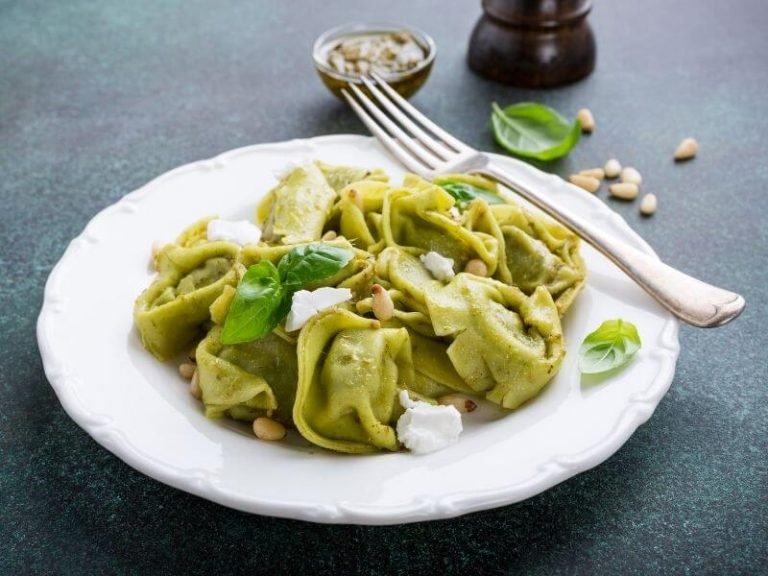
If you enjoy traditional Italian pasta dishes, you may also like our guides to gnocchi, cavatelli, and tortelloni. These dishes show how varied Italian pasta can be, from soft potato-based pasta to regional shapes and filled pasta styles.

Spaghetti Carbonara Wine Pairing
This classic Italian dish is a true crowd-pleaser, and can be enjoyed on its own or with a delicious wine pairing. But with so many options out there, it can be hard to know where to start. Here are some of the best wine pairings for Spaghetti Carbonara that are sure to impress your guests and elevate your dining experience.
First up, we have Chardonnay. This full-bodied white wine is a classic pairing for creamy pasta dishes like Carbonara, and its buttery, oaky notes complement the richness of the sauce. Look for a California or Australian Chardonnay that has been aged in oak barrels for an extra depth of flavor.
Next, we have Pinot Grigio. This crisp, light white wine is a popular choice for Italian cuisine, and its refreshing acidity pairs well with the saltiness of the pancetta in Spaghetti Carbonara. Choose a Pinot Grigio from Italy’s Veneto region for a true taste of the country.
For those who prefer red wine, a Pinot Noir is a great option. This light-bodied wine has delicate flavors of cherry and raspberry that complement the subtle flavors of Spaghetti Carbonara without overpowering it. Choose a Pinot Noir from Oregon or New Zealand for a fruity, acidic wine that won’t clash with the dish.
Another red wine that pairs well with Spaghetti Carbonara is a Chianti. This medium-bodied wine is made from Sangiovese grapes and has a slightly tart taste that pairs well with the richness of the sauce. Look for a Chianti from the Tuscany region of Italy for an authentic pairing.
Last but not least, we have Prosecco. This sparkling white wine is a refreshing pairing for Spaghetti Carbonara, as its bubbles cut through the creaminess of the dish and cleanse the palate between bites. Choose a dry, crisp Prosecco from the Veneto region of Italy for a light and refreshing pairing.
In conclusion, the best wine pairing for Spaghetti Carbonara depends on your personal taste preferences. Whether you prefer a full-bodied Chardonnay or a light and refreshing Prosecco, there’s a wine out there that will complement the rich flavors of this classic Italian dish. So grab a bottle, pour yourself a glass, and enjoy the delicious pairing of wine and Spaghetti Carbonara.

Spaghetti Carbonara Variations
Did you know that there are different variations of this Spaghetti Carbonara throughout Italy? Each region has its own unique take on Spaghetti Carbonara, and these variations are a testament to the diversity and richness of Italian cuisine.
Let’s start with Rome, the birthplace of Spaghetti Carbonara. Roman-style Carbonara is made with spaghetti, guanciale (cured pork jowl), eggs, and Pecorino Romano cheese. The sauce is creamy and rich, but not overly heavy, and the guanciale adds a salty and savory flavor.
Moving north to the Emilia-Romagna region, we have Carbonara di Zucchine. This variation replaces the traditional meat with zucchini, creating a lighter and more vegetable-based dish. The zucchini is cut into thin strips and sautéed in a pan with garlic and olive oil before being added to the spaghetti and egg mixture.
In Sicily, Carbonara di Mare is a popular seafood variation that uses shrimp, scallops, or other shellfish instead of pork. The sauce is made with eggs, Pecorino Romano cheese, and a splash of white wine, and is then tossed with the seafood and spaghetti.
In the southern region of Calabria, Carbonara di Nduja is a spicy variation that uses nduja, a soft and spreadable type of salami. The nduja is mixed with eggs and Pecorino Romano cheese, and then tossed with spaghetti for a bold and flavorful dish.
Lastly, in the Piedmont region, Carbonara di Funghi is a mushroom-based variation that uses porcini mushrooms as the main ingredient. The mushrooms are sautéed in butter and garlic, and then mixed with spaghetti and a creamy egg sauce.
In conclusion, Spaghetti Carbonara is a dish that has evolved and adapted throughout Italy, each region adding their own unique twist. From seafood to vegetables to spicy meats, there’s a Carbonara variation for everyone to enjoy. So next time you’re in Italy, be sure to try out the different regional variations of this beloved dish and discover the diverse and delicious flavors of Italian cuisine.
For another comforting Italian classic, you can also read our lasagna guide, which explores one of Italy’s most loved baked pasta dishes.

Spaghetti Carbonara Calories and Nutrition
With all that deliciousness comes the question of its nutritional value. In this article, we’ll take a closer look at the calories and nutritional aspects of Spaghetti Carbonara.
First, let’s talk about calories. A single serving of Spaghetti Carbonara can range from 600-1200 calories, depending on the recipe and portion size. This is due to the high amount of fat and carbohydrates in the dish, as well as the addition of bacon or pancetta.
Next, let’s talk about the nutritional content of Spaghetti Carbonara. While it’s not exactly a health food, there are some nutrients to be found in this dish. The pasta provides carbohydrates for energy, and the egg yolks and cheese provide protein and calcium. However, it’s important to note that Spaghetti Carbonara is also high in saturated fat and sodium, which can be detrimental to your health if consumed in excess.
If you’re looking to make Spaghetti Carbonara a bit healthier, there are some substitutions you can make. Use whole wheat pasta instead of white pasta to add more fiber and nutrients to your meal. You can also use turkey bacon or Canadian bacon instead of traditional pancetta or bacon to reduce the amount of saturated fat. Additionally, you can add more vegetables to the dish, such as spinach or broccoli, to increase the vitamin and mineral content.
In conclusion, Spaghetti Carbonara is a delicious but calorie-dense dish that should be enjoyed in moderation. While it does provide some nutrients, it’s important to be mindful of the high levels of saturated fat and sodium. By making a few substitutions and additions, you can make this dish a bit healthier without sacrificing its rich and creamy flavor.
Other Italian Dishes You May Also Like
If you enjoyed learning about spaghetti carbonara, there are several other classic Italian dishes and ingredients worth exploring next.
For another comforting pasta dish, read our guide to gnocchi, a soft and satisfying Italian favourite often served with tomato, cheese, butter, or sage-based sauces.
If you prefer baked Italian comfort food, our lasagna guide is a great next recipe to explore, especially if you enjoy rich, layered dishes made for sharing.
You can also explore cavatelli, tortelloni, and garganelli if you want to discover more traditional Italian pasta shapes beyond spaghetti.
For a broader overview, visit our Italian cooking guide, where we bring together classic Italian dishes, ingredients, cheeses, cured meats, desserts, and useful kitchen tools for cooking at home.